Drinking water directive
The Council Directive 98/83/EC of 3 November 1998 on the quality of water intended for human consumption (Official Journal of the EU 5.12.1998.330, DWD), was adopted in 1998. In the meantime, changes were introduced to it, but they were not significant for water utilities. On February 1, 2018, the European Commission (2018) published a proposal for a major amendment to the Directive on the quality of water intended for human consumption, proposing its new text. The debate on the final legal act ended with an informal political agreement reached in February 2020. The directive has been published under number 2020/2184 and entered into force in January 2021. The challenges are summarized in the table below:
| Art. | Title, requirements | Needs, challenges faced by various stakeholders |
| 1 | ObjectivesThe goals concern not only quality but also access to water. | Providing access to clean and healthy water for all. |
| 2 | DefinitionsThere are new definitions, such as domestic distribution system, priority premises. | The necessity to introduce or refine definitions. |
| 3 | ExemptionsRestrictions for the use of certain articles of the directive by the smallest suppliers. | The necessity to define the responsibilities of big and very small entities. |
| 4 | General obligationsWater quality detailed in Annex I. Prevention of contamination of waters intended for production of water intended for human consumption.Leakage reduction. | The need to implement the Water Framework Directive, deterioration of the resources used for abstraction is unacceptable.The necessity to reorganize the water quality control system.In the long term – the obligation to monitor and reduce leakages. |
| 5 | Quality standardsValues in Annex I, possibility to define additional parameters. | Implementation of laboratory test plans and water quality control.Possible determination of values for additional parameters, locally relevant. |
| 6 | Point of complianceThe parametric values to be controlled at point of compliance – in a tap. | Establishing points of compliance, taking risk reduction measures. The necessity of close cooperation of water utilities with entities responsible for domestic distribution systems (priority premises).Broadening the scope of information for consumers. |
| 7 | Risk-based approach to water safetyA risk-based approach covering the entire supply chain from the catchment area, abstraction, treatment, storage and distribution of water to the point of compliance.Division of the risk management system into three parts:- catchment area- water supply system- domestic distribution system | Mandatory risk assessment and risk management throughout the entire supply chain, clear division of responsibilities between stakeholders. |
| 8 | Risk assessment and risk management of the catchment areas for abstraction points of water intended for human consumptionThe scope and details of risk management in this area | The need to organize cooperation between stakeholders.The necessity to integrate the measures with other directives (especially 2000/60 / EC).Adjustment of monitoring.The necessity to organize the entire system (development, approval and enforcement), which requires the involvement of multiple stakeholders. |
| 9 | Risk assessment and risk management of the supply systemThe scope and details of risk management in this area. | Implementation of full risk management by water suppliers: control measures, operational monitoring, tool matching. |
| 10 | Risk assessment of domestic distribution systemsThe scope and details of risk assessment in this area. | The necessity of risk assessment.Legionella monitoring in priority premises. The need to inform and advise facility administrators, plumbers. |
| 11 | Minimum hygiene requirements for materials that come into contact with water intended for human consumptionObligation to control the safety of materials used in the construction of installations. | Many obligations imposed on the European Commission – the need to work out details. The need to verify new materials |
| 12 | Minimum requirements for treatment chemicals and filter media that come into contact with water intended for human consumptionObligation to control the safety of treatment chemicals. | The necessity to control the safety of substances used in water supply systems.Many obligations imposed on the European Commission – the need to work out details. |
| 13 | MonitoringMonitoring following Annex I, Parts A, B, C, and additional parameters if necessary.Monitoring following Annex I, Part D (domestic distribution systems)Monitoring by watch list.Monitoring to identify hazards and hazardous events.Operational monitoring following Annex II, part A.Identification of new threats – creating and updating the watch list.. | The necessity to reorganize monitoring programs.New burdens related to new substances for monitoring. A new challenge for the European Commission – creating and updating the watch list. |
| 14 | Remedial action and restrictions of usePossible reactions to non-compliance with parametric values or a health hazard. | Investigation, determination of the cause, consumer notifications, corrective actions. |
| 15 | DerogationsDerogations from the directive allowed in three specific cases and for a certain period of time. | The necessity of conducting remedial actions, investments, changes in functioning. |
| 16 | Access to water intended for human consumptionTaking all necessary measures to improve or maintain access to safe water for all. | The necessity of identification of marginalized groups, analysis of the possibilities of improving their situation.Construction of installations in public spaces outside and inside buildings. |
| 17 | Information to the publicInformation to consumers in accordance with Annex IV.More information obligations for entities supplying more than 10 000 m3/d or serving more than 50 000 people. | The necessity of preparing information, remodeling, and updating websites as well as water bills format. |
| 18 | Information on monitoring of implementationReporting as the responsibility of the Member States. | Possible modifications to the reporting system |
| 19 | EvaluationAssessment of the directive | Competence of the European Commission |
| 20 | Review and amendment of Annexes | Competence of the European Commission |
| 21 | Exercise of the delegationConditions for the adoption of delegated acts by the European Commission. | Competence of the European Commission |
| 22 | Committee procedureSupport for the European Commission. | Supporting procedure for the European Commission based on committee procedure |
| 23 | Penalties.The sanctions must be effective, proportionate and dissuasive. | The obligation for the Member States to lay down rules on sanctions. |
| 24 | TranspositionIntroduction of provisions to national law. | The obligation of the introduction of changes to national law. |
| 25 | Transitional periodTransitional period defined for some new substances or their groups. | The necessity to adjust national law and monitoring. |
| 26 | RepealRepeal of Directive 98/83 / EC as of January 13, 2023 (granted derogations remain valid) | |
| 27 | Entry into forceJanuary 12, 2021 | |
| 28 | AdresaciMember States |
Horizon Europe

MISSION STARFISH 2030 – KNOW, RESTORE AND PROTECT
OUR OCEAN AND WATERS
Mission Healthy Ocean, Seas, Coastal and Inland Waters
The Mission issued the first draft on Horizon challenges in water management
The Mission “Healthy oceans, seas, coastal and inland waters” aims to know, restore and protect our ocean and waters by 2030, by reducing human pressures on marine and freshwater environments, restoring degraded ecosystems and sustainably harnessing the essential goods and services they provide. Protection and conservation efforts must address the entire integrated ocean and water system in a holistic fashion if they are to succeed. Inspired by the shape of the starfish, the Mission pursues five interdependent objectives – knowledge, regeneration, depollution, decarbonisation and governance – uniting overall 17 ambitious, concrete and measurable targets for 2030.
The main challenges are:
- Filling the knowledge and emotional gap
- Regenerating marine and water ecosystems
- Zero pollution
- Decarbonising our waters
- Revamping governance
Are they motivating?
Are you concerned about cancer, climate change, about having a greener city or healthy soil and oceans? Do you want your voice heard?
COUNCIL OF COMPETENCES IN THE WATER SECTOR
February 2020
Last autumn, the Institute of Environmental Protection The Polish National Research Institute, together with the Polish Waterworks Chamber of Commerce, started a project entitled “Council of competences in the water sector”. The project is co-financed by the European Social Fund under the Operational Programme “Knowledge Education Development 2014-2020″. The main objective of the project is to increase the influence of entrepreneurs from the water sector on educational institutions (both from the area of formal and non-formal education), so that the acquired qualifications are adapted to the real needs of employers in the sector. The aim is to match the educational opportunities of universities, secondary schools and other training providers to the staff needs of water supply companies. The main task of the Council is to analyze the market and propose changes that will improve the adjustment of the training offer to the needs of the water sector. Therefore, the Council is to carry out studies covering the education market and the needs of the sector, to analyze the existing legal acts and, on the basis of the gained knowledge, recommend changes in education and regulations. The Council will develop competence needs, but also recommendations for the most vulnerable employees, including those over 50, disabled or low-skilled. A very important element of the activity is to initiate cooperation on creating educational agreements between water supply companies or service providers and the training sector. The Council is therefore intended to be a special link between our industry and the education sector. It is supposed to transfer information about the demand for competences to educational institutions, utilities and social partners identifying the development needs of enterprises.
On 6 February, the first meeting of the Council took place. The members were appointed by the Minister of Development. Members of the Board are representatives of universities, schools, social and training organisations, trade unions, as well as water supply companies and companies providing them with services and products. The representatives of the Polish Agency for Enterprise Development have introduced the subject of Sector Councils. Outside our industry, they include marketing communication sector, fashion (tailoring) or recovery of raw materials. They can be found on the PARP website: https://www.parp.gov.pl/component/site/site/sektorowe-rady-ds-kompetencji
The key issue in developing needs is of course knowledge of the sector. We already have some knowledge thanks to the experience of the Council members, but also thanks to systematic human resources research. Human Capital Balance is one of the largest European research projects in the area of competences, employment and the labour market. Its aim is to diagnose and monitor human resources existing on the Polish market and factors for their development. The results of the research are the basis for formulating recommendations in areas such as: science and education, labour market, development of entrepreneurship. Research on Human Capital includes population surveys (professional activity, education, quality of work, attitudes towards work, universal competences, adult learning), employer surveys (demand, recruitment difficulties, competence expectations, investments in human resources development, management, innovations) and research in the training and development sector (offer, condition, quality, personnel, cooperation, innovations). Members of the Council will also be assisted by industry-oriented research conducted by a specialist company. Its task will be to provide information on the needs of the water supply companies in terms of competence requirements.
During the inaugural meeting, the Council members received information about the Integrated Qualification System, presented by the Educational Research Institute. More information about the System can be found at https://www.kwalifikacje.gov.pl
During the inaugural meeting, the Council had to face the first challenge and give its opinion on the proposal to include in the Integrated Qualification System the market qualification ”service of small wastewater treatment plants”. The discussion was stormy, many comments were made, which is certainly a positive signal for the future. There are many challenges ahead of us, and the enthusiasm is great, so we hope that the results of the project will provide positive solutions for the water industry.
BENCHMARKING
November 2019
For over 10 years IGWP has been offering Polish companies the opportunity to participate in benchmarking. It is becoming more and more popular, and thanks to the passing years it is possible to observe not only the parameters of the “here and now”, but also trends.
In Europe there are many local and a few international benchmarking projects, or similar solutions, based on the comparison of many parameters. EU countries already have a lot of experience.
In the water and sanitation sector, it is necessary to compare public utility results, as the sector offers limited opportunities for direct competition. Companies operating on competitive markets are under constant pressure to improve their performance, but water supply systems are often deprived of it. Nevertheless, some of them are on the path of sustainable improvement, but many others are still far behind the best. This is of great social importance because a well-managed water supply and sewerage infrastructure is essential to people’s lives. Only the most efficient and financially viable utilities are able to respond to urban development and improve delivery practices.
Denmark
The Danish organization of water and sewage companies DANVA has more than 120 members serving more than 5 million inhabitants of the country. In 2002, DANVA launched a benchmarking exercise for members wishing to undertake a broader and more detailed review of their activities in order to improve their performance.
The discussion of the results leads to changes and sometimes introduction of new parameters. For example, in 2014 it was decided to add a new category of consumer – “holiday home”, due to the growing water consumption by this group of consumers.
Netherlands
Dutch Benchmarking was launched in 1997. Every year the Dutch organization Vewin publishes data on the sector based on benchmarking results, but also on indicators from its own database. The report published by Vewin presents a lot of data on the direction of change and the condition of the sector. For example, interesting trend related to energy consumption and source of energy.

Energy consumption and energy source in the production of drinking water. Source: Drinking water fact sheet 2018, Vewin 2019.
United Kingdom
Water supply and sewerage services in England and Wales are provided by private monopolies, so the requirements for an independent regulator (OFWAT) are very high. OFWAT publishes a large number of indicators presenting a wide range of comparative data. It is not a typical benchmarking, but it is very transparent and accessible. Every 5 years, when tariffs are reviewed, OFWAT publishes data on the business plans of the controlled companies.
In Scotland, which is operated by one regional company, the regulator (WICS) publishes performance data. This cannot be a benchmarking exercise, as Scottish Water is the only one.
Finland
Benchmarking in Finland was launched in 2003 by 8 municipal water supply companies. FIWA, a sectoral organization, took over the coordinating role in 2006 and since then around 50 utilities have participated in national benchmarking. After entering the data, the participating water supply companies can compare their data with each other, create comparative groups according to their own needs.
IBNET
IBNET is a World Bank initiative covering tens of countries and thousands of companies on all continents. It is not a strict benchmarking, but it helps to compare many general indicators. The aim of IBNET is to support access to comparative information that will help promote best practice among suppliers. It is a tool for managers, but also for governments and regulators who can monitor and adapt both policies and sectoral programmes to local conditions. Private investors can also use publicly available data to identify real markets. The availability of many data is useful for many stakeholders, but a comparison must be justified by a comment, as the conditions of operation of the entities differ significantly. IBNET is therefore an initiative to encourage water and sanitation companies to develop and share a set of core indicators and thus meet the needs of different stakeholders. Within the framework of the project, a common set of data definitions, a minimum set of basic indicators and software enabling easy gathering of information, calculation of indicators and their presentation were developed. Creators stress that sharing results is crucial for effective performance benchmarking.
Aqua rating
Aqua rating is a comprehensive system for assessing the effectiveness of water and sewage services developed by IWA (International Water Organization) and IADB (Inter-American Development Bank). It is based on the principle of continuous improvement of water and sewage services through the provision of rigorous, systematic and universal evaluation.
Aqua Rating evaluates water and sewage providers through three measurements: performance indicators, best practices and information quality, in eight key areas. Information is validated through an independent audit, increasing accountability and transparency. This method evaluates water supply and sewage service providers in 8 key areas, each of which receives a rating of 0 to 100. These ratings are then aggregated into one utility assessment:
EBC
The EBC seems to be the most mature benchmarking system in Europe.
The European Benchmarking Cooperation was launched in 2005 by the national water associations of the Netherlands and the Nordic countries (Danish DANVA, Finnish FIWA, Norwegian Norsk Vann, Swedish Svenskt Vatten, Dutch Vewin) and utilities from six cities. After two pilot exercises, the EBC launched an annual benchmarking exercise for European and even non-European water companies. In 2014, the programme consortium was transformed into the EBC Foundation. This allows for a more independent European profile, strengthened programme management and a better focus on the core activity of comparing water supply and sewage services.

Members of EBC, only utilities which participated in the exercise at least 5 times.
The programme covers both data collection and benchmarking, as well as training and workshops on how to improve benchmarking activities. Fitness check helps participants find areas and priorities for improvement in a structured and objective way and share knowledge and experience. Another objective is to help companies to increase transparency of services by providing reliable, standardized information on management performance and by enabling data exchange with other institutions (e. g. IBNET of the World Bank, regulators, decision makers).
Sources:
– Drinking water fact sheet 2018, Vewin 2019r.
– Water in numbers, DANVA 2017.
– How benchmarking is used in the Water Sector, EurEau 2015.
– https://iwa-network.org/projects/aquarating/
– https://www.waterbenchmark.org
– Paweł Chudziński, Cezary Kochalski, Benchmarking of costs in value management in a water supply company in Poland, 2013.
PHARMACEUTICALS IN THE ENVIRONMENT
Humanity has been using medicines since the beginning of its existence. Most of them help and heal, which is undoubtedly their greatest blessing. Unfortunately, they have their dark side, which results mainly from their constantly growing consumption, which is connected, amongst others, with too easy access and abuse. More and more often a slight headache or abdominal pain causes that we immediately reach for the tablet, which is not indifferent to our body or the environment. So pharmaceuticals are by people, and also in increasingly larger amounts by animals, excreted and in some part are released to the environment. Pollution from certain pharmaceuticals presents a problem with well documented evidence of risks to the environment and human health. The volume of pharmaceutical products sold on the European market has increased rapidly over the last few decades, both in terms of volume of sales and in terms of the number of substances traded. According to the European Commission, more than 3000 active pharmaceutical ingredients are currently available on the market.
National Geographic presents the consequences of huge pharmaceuticals consumption
March 29, 2019
SINGLE USE PLASTIC
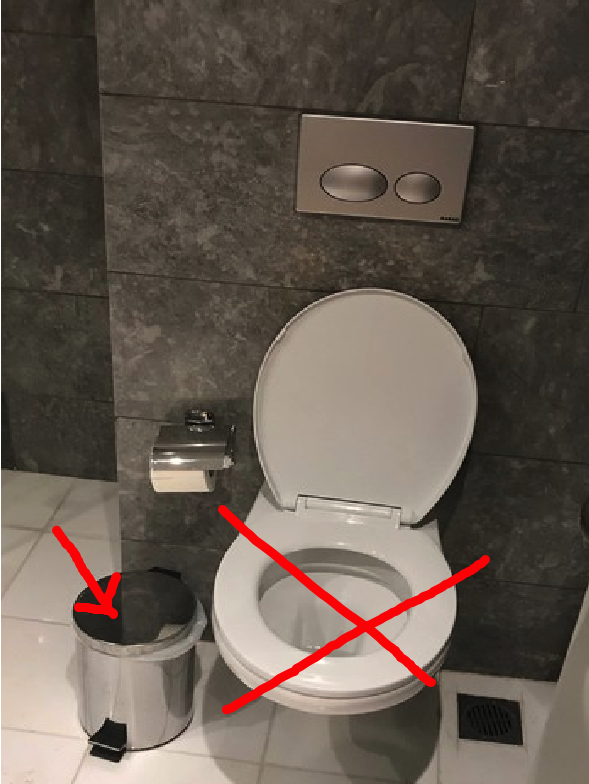
On 28 March, in line with the agreement reached by the EU institutions in December 2018, the EP adopted a Directive of the European Parliament and of the Council on the limitation of the impact of certain plastics products on the environment. (single-use plastic directive). The directive is the result of a sharp increase in environmental pollution with plastic products. According to the European Commission, over 80% of marine pollution is plastic waste. PET bottles, cigarette butts, straws, plastic bags etc. are the most problematic waste to reduce. The decision was supported by the vast majority of MEPs (560 for, 35 against, 28 abstentions). For the sewage industry, EU legislation is extremely important in reducing plastic waste going to the sewage system, because wet wipes and other personal hygiene products (sanitary towels, tampons, etc.) rinsed in toilets are a nightmare for operators. According to the Extended Producer Responsibility, manufacturers of some personal care products will have to label their products so that the consumer knows they are not allowed to flush in the toilet. Producers will also have to participate in information and education campaigns on the correct disposal of their products. This form of the directive is a success of the Polish waterworks of the Chamber of Commerce and EurEau, which on behalf of operators of sewage systems and sewage treatment plants demanded regulations limiting the amount of plastic products flushed in the toilet. Consumers often do not realize that their irresponsible approach results in significant costs of cleaning the network, removing congestion and replacing pumps.
January 20, 2019.
DIRECTIVE ON WATER QUALITY
The progress related to the knowledge of the impact of water on human health is undoubtedly enormous. It has been in the minds of Europeans since a lot of time. Legislation in European countries appeared in the seventies of the XX century. However, these were local solutions. The first European directive on drinking water quality (80/778 / EEC) was adopted in 1980, during the European Community time. It was intended to ensure that substances used during treatment processes are safe for human health. It introduced 60 control parameters. In 1995, the procedure of drafting a new directive started. And so, after 18 years, Directive 80/778 / EEC was fundamentally changed to the current Council Directive 98/83 / EC of November 3, 1998 on water quality intended for human consumption (drinking water directive, DWD). Despite the DWD modification, it is still valid today. It should be noted, that it should be consistent with the latest scientific achievements, responding to the challenges of the modern world. It turned out that the corrections already applied were not enough, that the time had come for profound changes, updating the requirements for water service providers, as well as national and regional administrations and producers of materials and products in contact with drinking water. The European Commission has therefore decided to propose a new document. She asked the World Health Organization for recommendations regarding the parameters that should be mandatory to ensure water safety, according to the latest knowledge and scientific research. Another circumstance appeared: in 2013, over one million EU residents signed the initiative „Right to water”, raising the issue of the need to ensure access to safe water and sewage services to all people. It was one of the most important factors that motivated the European Commission to start the DWD evaluation. A public consultation was carried out, which indicated the growing trust of residents in the water and service providers. In addition, the results of the report prepared in 2016 by the European Environment Agency confirmed that 98.5% of water samples meet EU standards. On 1 February 2018, the EC proposed a new directive text. During a press conference presenting the new text of the directive, EC Vice-President Frans Timmermans drew attention to the need to reduce the consumption of water in plastic bottles in favor of tap water. The changes proposed in the DWD proved to be very significant both for the water supply sector and for the administration of the member states. The consultation process of the directive with stakeholders has begun. In October, the European Parliament proposed amendments. Currently, the Council of the European Union is developing the so-called a compromise that would be acceptable to the European Commission, Parliament and all EU countries.